


Pet Export – Get Your Pet Ready To Fly

Pet Export – Get Your Pet Ready To Fly
Exporting a pet (including cats and dogs) from Israel to virtually any country in the world is a complex matter that requires strict adherence to international health conditions.
The complexity arises because Israel isn’t a rabies-free country. As a result, moving a pet abroad requires meeting numerous demanding health and documentation requirements that focus heavily on rabies protection and confirmation.
The primary authority responsible for setting and enforcing pet export and import requirements, in most nations, is the Ministry of Agriculture. Before you begin planning, we strongly recommend reviewing the official websites of the relevant government ministries for your destination country to familiarize yourself with their specific import procedures.
Due to the mandatory waiting periods associated with the rabies antibody titer test (the gold standard for proving rabies immunity), early planning is absolutely essential.
For example, exporting a dog or cat to Europe takes about 3-4 months. On the other hand, the process to Australia takes about 6-7 months!
Therefore, we recommend starting the documentation and veterinary process as soon as you know your relocation dates to avoid costly flight delays or cancellations.
Exporting A Pet – The Basics
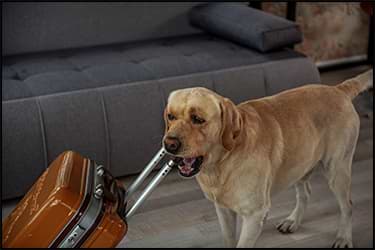
Since rabies is endemic in Israel (meaning the country is not considered rabies-free), the initial step for exporting your pet to any country in the world is simple: you must ensure your pet is fully compliant with the local Israeli animal health regulations.
The current Israeli law states that every dog must be identified by an electronic microchip that meets ISO standards (the international standard). Furthermore, every dog must have a valid rabies vaccination.
This means that if you are a dog owner, and you complied with the Israeli law, your dog already possesses the two most fundamental requirements for international travel: an ISO-standard microchip and a current rabies vaccine.
Unlike dogs, which are legally required to be registered and vaccinated in Israel, many cat owners, who keep their cats strictly indoors, often don’t microchip and vaccinate their cats.
If your cat has not yet received an ISO-standard microchip and a current rabies vaccination, this adds essential preparatory steps to the relocation timeline.
Therefore, the pet export process for cats can sometimes be slightly longer than for already compliant dogs, as you must first complete these foundational veterinary steps before you can proceed with the international paperwork and the time-sensitive rabies titer blood test. Starting these steps as early as possible is crucial to prevent unnecessary delays.
Why Social Media Advice Can Delay Your Pet’s Export

In recent years, social media has become the ultimate source for “real-world” travel experiences. When planning a pet’s export from Israel, it’s only natural to turn to online groups to find out what others are saying.
For those unfamiliar, online communities are powered by users who genuinely want to share their firsthand experiences and offer support. Within these groups, you can often find fantastic, primary information “from the field” which can help contextualize and simplify the dense legal documents you read on official government websites. Reading about someone’s experience flying their pet of a similar breed or to the same destination can provide peace of mind and help you ask the right questions.
While we highly recommend reading people’s opinions and engaging with the community to get a better idea of the process, it is absolutely vital to take this information with a large grain of salt:
- Information accuracy – the shared information is not always correct, even if well-intentioned.
- Procedures change constantly – government import procedures and airline policies are updated constantly. Relying on an experience someone had a couple of months ago is risky.
- Every case is unique – a successful journey for one pet owner does not guarantee success for yours. Small details, such as the pet’s age, the date of the last rabies vaccine, the specific country you are flying into, or the exact date the blood test was taken, can change the entire timeline!
In conclusion – use social media groups for support and general context, but never rely solely on peer experiences for your official pet export process. Always cross-reference advice with professional services or official government websites to ensure you meet all the mandatory requirements and avoid costly and stressful delays.
Finding The Right Flight – More Than Just A Ticket
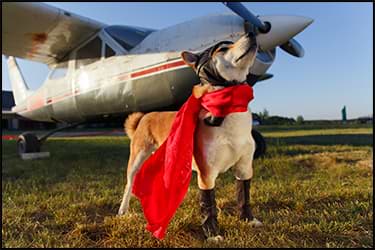
Choosing the right airline for your pet’s international flight is one of the most critical decisions you will make in the entire pet export process. While finding an airline that will fly your pet is not overly complicated, understanding the specific rules and limitations of each carrier is essential for avoiding last-minute issues.
Every airline operates under its own specific set of policies, which often override general regulations. Before booking your own ticket, you must verify these crucial details regarding your pet:
- Breed restrictions – some airlines strictly prohibit the transport of certain breeds, particularly flat-nosed (brachycephalic) dogs (e.g., Pugs, Bulldogs, Boxers). These pets are at higher risk of respiratory distress during flight, and many carriers refuse to fly them in the cargo hold.
- Kennel size and weight limits – airlines impose maximum limits on the dimensions and weight of the travel kennel they will accept, especially for larger pets traveling in the hold. You must ensure your pet’s IATA-compliant flight crate meets the specific airline’s size ceiling.
To minimize stress and risk, we strongly recommend prioritizing the following when selecting an airline and route:
- Direct or single-connection flights – always search for the most convenient and shortest flight path. Direct flights are ideal. If a connection is necessary, choose a route with only one connection to limit handling and potential mistakes.
- Pet-friendly airlines – research the airline’s reputation for transporting animals. Look for carriers known for their efficiency, clear communication, and dedicated pet areas in connecting hubs. The better the reviews, the smoother the process tends to be.
Remember – your pet’s well-being relies on the logistics of the airline. We strongly recommend using professionals who can match your pet’s needs and the crate’s specifications to the few airlines truly equipped for safe international pet travel.
Crate Training Is Non-Negotiable
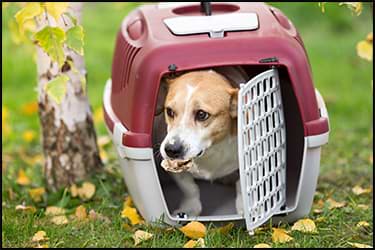
Your pet’s IATA flight crate is more than just a box for transport; for your pet, it must become a “second home” – a place of comfort, safety, and familiarity. This is the most crucial step you can take to ensure your pet has a calm and comfortable transition during international travel. Do not skip this step!
Your pet is about to spend several hours, or even a full day with connections, confined to their kennel. When pets are unfamiliar with their crate, the combination of confinement, loud airport noises, and separation from the owner can cause intense fear and panic, leading to serious distress and anxiety.
Our experience shows that the more accustomed your pet is to the flight crate, the easier and safer the entire move will be.
We recommend starting the kennel training process a few months in advance of your flight date. The goal is to get your pet to enter and rest in the crate freely and willingly.
- Introduce gradually – place the kennel in a common area of your home, with the door open. Let your pet explore it on its own terms.
- Make it inviting – place comfortable bedding, favorite toys, and high-value treats inside the kennel. Feed your pet their meals inside the kennel to build a positive association.
- Positive reinforcement – when your pet voluntarily enters or rests inside, praise them and give them a treat.
- Practice confinement – once your pet is comfortable entering, practice closing the door for short, increasing periods of time (starting with just 5 minutes) while you remain in the room.
When your pet feels confident entering their “new house” in your presence, they will feel secure doing so without you on the day of the flight.
Arriving At The Airport – The Final Logistical Challenge
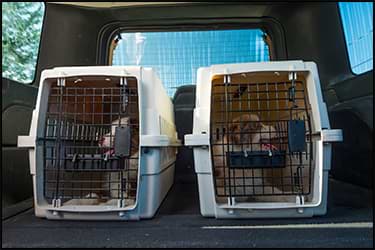
It’s important to prepare for the logistics, especially if you have a large pet:
- Vehicle Space – finding a taxi willing (or physically able) to accept a large travel crate, plus your luggage and your pet, is often a significant hurdle. For large pets, you may need to specifically request a minivan or a large SUV.
- Pet Comfort – traveling with a stressed pet in an unfamiliar vehicle can add unnecessary anxiety right before the flight.
To make the ground journey easier, please note two important facts:
- Flight Crate Assembly is Not Mandatory – you are not required to transport your pet to the airport inside the complex, fully assembled, hard-sided flight crate.
- On-Site Assembly – you can bring the large flight crate (which must meet IATA standards) disassembled in pieces and take your pet on a leash. The final assembly of the IATA-compliant flight crate at the airport will only take you a couple of minutes and can be done right before check-in. This makes finding a suitable transport much easier.
If you prefer to focus entirely on your own travel and minimize stress, we offer a dedicated ground transport service. We will manage the secure pickup of your pet and the flight crate from your location and deliver them directly to our representative at the cargo terminal, ensuring a smooth hand-off and eliminating your need to coordinate vehicle logistics.
Please note that our ground transport service is only for pets that are traveling as manifest cargo (unaccompanied freight).
Exporting A Pet With Pets2Fly

The day of the flight is often accompanied by a mix of stress and excitement. It is completely natural to worry about your pet’s comfort and safety: Will they be okay during the journey? Will they receive food and water? Will they be checked on during a layover?
We are here to provide the certainty and professional care you need!
Our service is designed to manage every detail, ensuring your pet has the easiest transition possible, whether it’s a short 3-hour trip or a long 12-hour flight with connections.
Relocating your beloved pet is too important to risk delays or issues!



Contact Us
We would love to hear from you!